
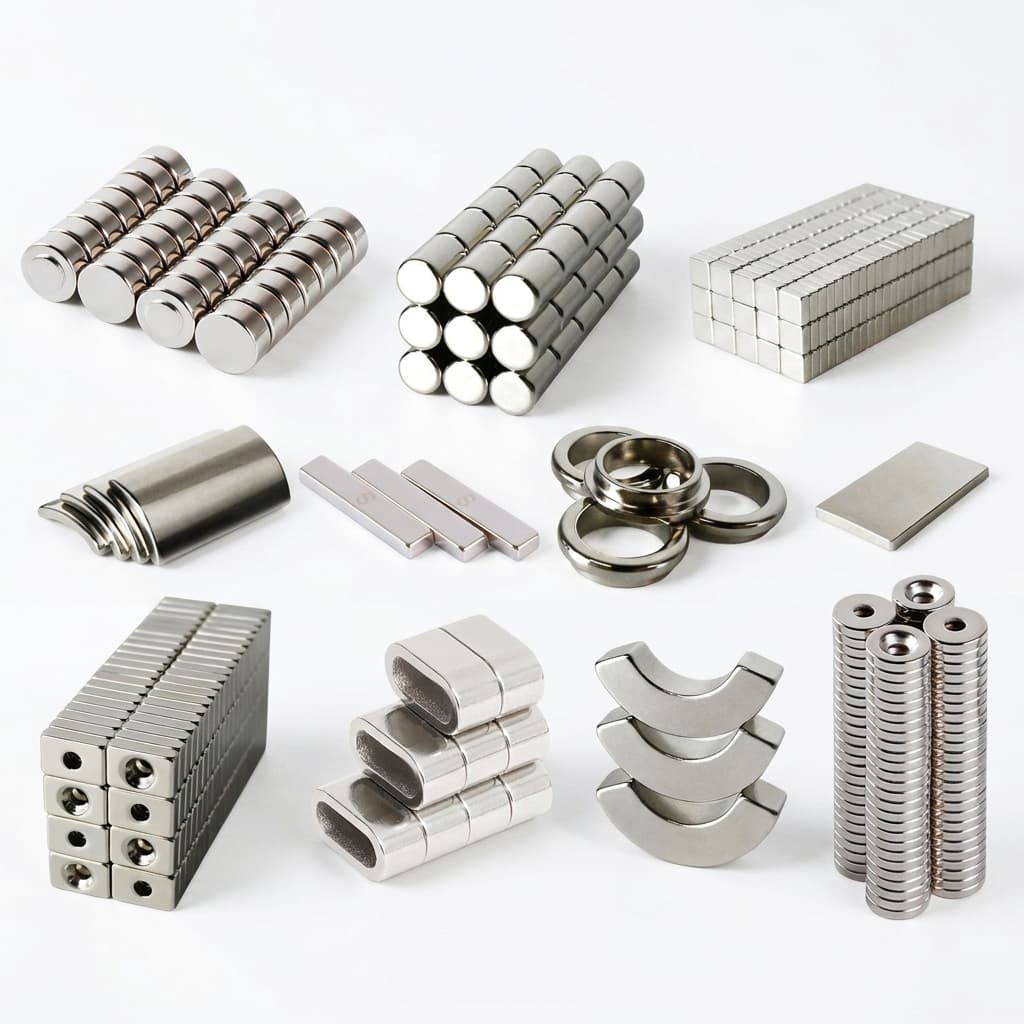
NdFeB Shape Selection Guide for OEM RFQ
A buyer-side playbook to choose NdFeB shapes, define RFQ inputs, and compare suppliers with fewer clarification loops and faster sample closure.
In RFQ reviews, the same issue appears repeatedly: the price table is complete, but geometry and acceptance fields are still ambiguous.
That is why first-sample outcomes drift, even when quoted unit prices look similar. This page focuses on the fields that actually change decision quality.
Before you release RFQ, lock these decisions
- Which shape family best fits your mechanical function.
- Which drawing fields must be fixed before RFQ.
- Which material and coating constraints should be declared early.
- How to compare quotes using one scoring logic.
1) Choose shape from function, not from catalog habit
Use this as a practical first-pass filter.
| Shape family | Best fit scenario | Key geometry fields | Typical buyer risk if unclear | Must be explicit in RFQ |
|---|---|---|---|---|
| Disc | Compact pull or trigger use, sensor modules | Diameter, thickness, edge condition | Quote looks comparable but force behavior differs in assembly gap | Working gap, mating material, polarity orientation |
| Block / Bar | Fixtures, linear assemblies, directional mounting | L x W x H, flatness, parallelism | Chipping, poor fit, unstable bonding | Critical faces and tolerance classes |
| Ring | Shaft-centric layouts, rotary systems | OD, ID, thickness, concentricity | Rotor balance drift, poor shaft fit | ID tolerance, concentricity, magnetization direction |
| Arc / Segment | Multi-piece circular magnetic paths | Arc angle, inner/outer radius, chord details | Assembly mismatch across segments | Segment count per set, pairing rules |
| Cylinder | Local field concentration, compact actuator zones | Diameter, length, end-face quality | Inconsistent insertion fit and force spread | End-face condition and orientation marking |
| Countersunk | Screw-mounted joints with reduced adhesive dependency | Hole type, countersink angle/depth, head fit | Fastener mismatch and crack risk near hole | Screw standard, seating surface rules |
2) Convert function into a complete drawing package
A drawing with only nominal dimensions is not RFQ-ready.
Use three criticality classes before release:
| Class | Meaning | Typical examples | Expected control intensity |
|---|---|---|---|
| A (functional-critical) | Directly affects fit, force, safety, or system stability | ID/OD for ring fit, countersink geometry, mating face flatness | Tight process control, higher sampling focus |
| B (assembly-critical) | Affects build efficiency and repeatability | Chamfer, edge-break, non-key mating dimensions | Standard production control |
| C (visual or non-functional) | Low impact on final function | Cosmetic surface consistency on hidden faces | Basic conformance checks |
Minimum RFQ drawing package:
- 2D drawing with revision number and date.
- Criticality marks (A/B/C) per feature.
- Datums and measurement references for key dimensions.
- Magnetization direction diagram.
- Coating and post-coating dimensional expectation.
3) Lock material class and temperature assumptions early
Many RFQs stop at N35 or N52. That is usually not enough once thermal load becomes a real constraint.
Buyer baseline for temperature class communication (typical industry convention, final values must follow supplier data sheet):
| Class suffix | Typical max operating temperature baseline | Common use intent |
|---|---|---|
| N | about 80 C | Standard ambient industrial environments |
| M | about 100 C | Slightly elevated temperature environments |
| H | about 120 C | Moderate thermal loads |
| SH | about 150 C | Higher thermal margin needs |
| UH | about 180 C | High-temperature industrial use |
| EH | about 200 C | Very high thermal environments |
| AH/VH | up to about 230 C | Extreme thermal margins with stricter trade-offs |
In RFQ text, include:
- Target operating temperature range (continuous and peak).
- Demagnetization risk context (duty cycle, nearby heat source, enclosure).
- Whether thermal margin is prioritized over maximum magnetic strength.
4) Add coating and environment constraints before quote comparison
Coating should be selected by environment and handling profile, not by default supplier preference.
Declare at least:
- Environment: dry indoor / humid / corrosive / mixed transport.
- Handling mode: manual, semi-automated, automated.
- Mechanical stress points: edge contact, insertion pressure, fastener seating.
Without these fields, suppliers may quote different coating stacks under the same label, and comparison becomes misleading.
5) Pre-RFQ cost and lead-time drivers buyers should control
| Driver | Cost impact | Lead-time impact | Buyer-side control action |
|---|---|---|---|
| Tight Class A tolerances | High | Medium to high | Tighten only truly functional features |
| Non-standard magnetization | Medium to high | Medium | Confirm necessity with application engineer |
| Multi-layer coating stack | Medium | Medium | Tie coating to real environment requirement |
| Small pilot quantities with many variants | High | High | Consolidate variant set for first pilot |
| Ambiguous drawing revisions | Hidden high | High | Freeze one revision before RFQ release |
6) Use one supplier comparison scorecard (100 points)
If each buyer compares quotes differently, decisions become slow and political.
Recommended scoring split:
| Category | Weight | What to check |
|---|---|---|
| Technical completeness | 30 | Response quality to drawing, magnetization, coating fields |
| Manufacturing feasibility | 20 | Process clarity, risk disclosure, critical-feature control plan |
| Sample plan quality | 15 | Sample quantity logic, verification coverage, timeline realism |
| Commercial terms | 20 | Price transparency, tooling assumptions, Incoterm clarity |
| Delivery reliability | 15 | Lead-time consistency and change-response commitment |
Use a shared sheet and require cross-functional sign-off (engineering + procurement + quality).
7) Copy-paste RFQ skeleton (buyer-ready)
Use this block in inquiry email or supplier portal form:
Subject: RFQ - NdFeB Magnet Program - [Project Name]

1) Drawing and revision:
2) Shape family and key dimensions:
3) Critical features (Class A/B/C):
4) Magnet grade and temperature class target:
5) Magnetization direction (with diagram reference):
6) Coating requirement and environment profile:
7) Sample quantity and sample validation deadline:
8) Pilot quantity and mass-production forecast:
9) Destination and target Incoterm:
10) Required lead-time window:
11) Required documents (inspection report / material cert / packing spec):
8) Red flags before PO release
Do not release PO if any of these remain unresolved:
- Supplier quote does not reference your exact drawing revision.
- Magnetization direction is described in text only, no diagram.
- Coating is quoted as "standard" without environment fit explanation.
- Sample acceptance criteria are not written and signed.
- Mass-production inspection logic is still "to be discussed".
9) Reference standards buyers often cite
The exact standards depend on your industry and contract terms, but these are commonly used in RFQ and release communication:
- ISO 2768 (general tolerances, when explicitly agreed).
- ISO 2859-1 (attribute sampling plans for incoming/outgoing checks).
- ASTM B117 or ISO 9227 (salt spray method reference for corrosion test planning).
- Customer-specific drawing and control-plan standards (must override generic defaults when conflict exists).
10) Worked quote-comparison example (3 suppliers, same drawing)
When teams say "Supplier A is cheaper," the statement is often incomplete. The real decision is total weighted score under one rule set.
Example scorecard (100 points):
| Supplier | Technical completeness (30) | Feasibility & process clarity (20) | Sample plan quality (15) | Commercial terms (20) | Delivery reliability (15) | Total |
|---|---|---|---|---|---|---|
| A | 22 | 14 | 9 | 18 | 9 | 72 |
| B | 27 | 17 | 13 | 15 | 12 | 84 |
| C | 24 | 15 | 10 | 19 | 7 | 75 |
Interpretation:
- Supplier A may show the lowest unit price, but weak sample logic and delivery confidence create higher launch risk.
- Supplier B can be commercially "more expensive per piece" but still win on total program stability.
- Supplier C is acceptable for short runs, but not ideal for strict release windows.
11) Data pack buyers should require before PO
| Document | Owner (supplier) | Buyer-side reviewer | Why it matters at PO stage |
|---|---|---|---|
| Quote response linked to drawing revision | Sales + engineering | Procurement | Prevents hidden revision mismatch |
| Critical-dimension report template | Quality | SQE / QA | Ensures the same report format for each lot |
| Magnetization sketch and point map | Engineering | Design + quality | Avoids polarity interpretation disputes |
| Coating declaration with thickness window | Process engineering | Quality | Connects corrosion expectation to measurable limits |
| Packing and labeling spec | Logistics | Procurement + warehouse | Reduces transit and receiving errors |
If one of these files is missing, release risk is usually underestimated.
12) Function-to-shape decision map (quick visual)
Final note
A better RFQ package does not remove all risk, but it removes most avoidable ambiguity before money and schedule are committed. If your team already has an internal checklist, map it to the sections above and close the missing fields first.
When your RFQ file is ready, send it to our team at [email protected] or WhatsApp +8618857971991 for engineering review and manufacturability feedback. If you need companion guidance, see:
Author

Categories
More Posts
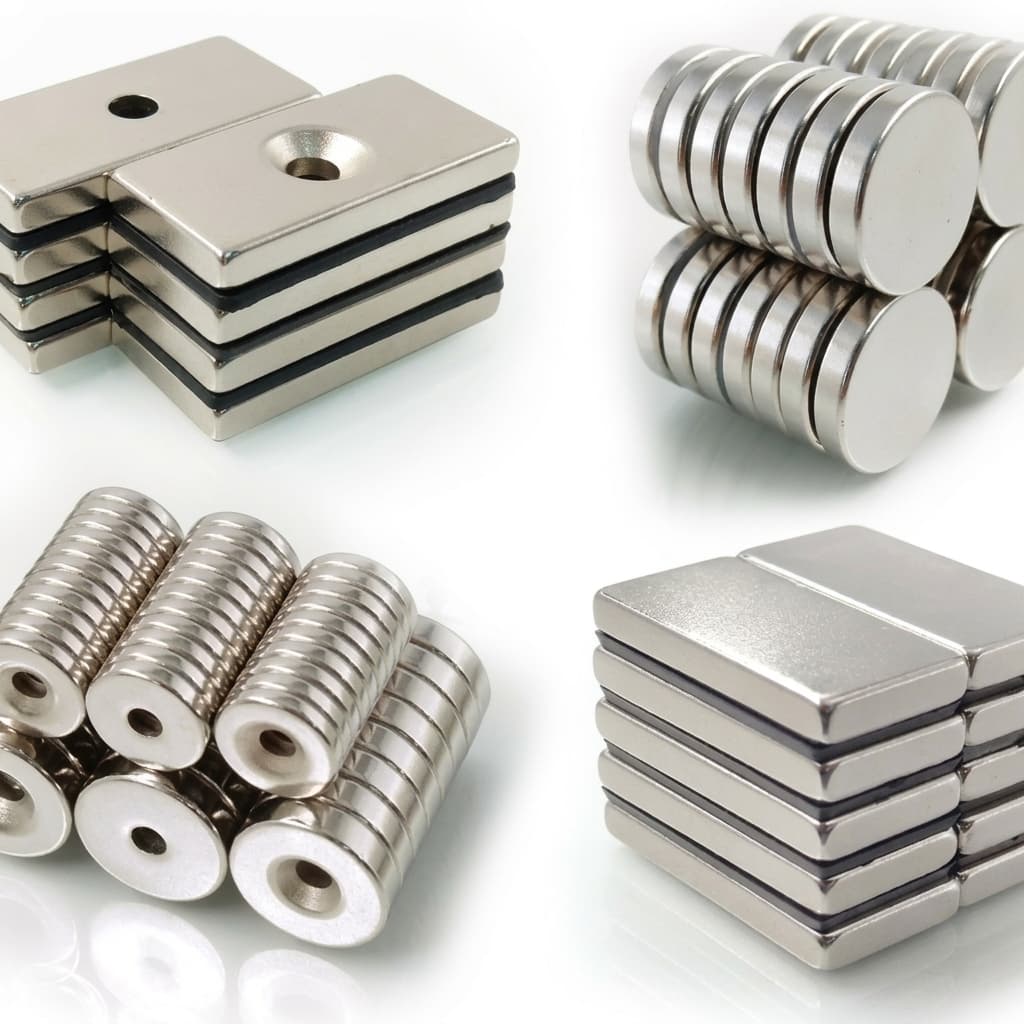
Rare Earth Permanent Magnets Market Update (May 2026): Buyer Playbook for NdFeB Grades, Tolerances, Magnetization, and Coatings
May 2026 NdFeB magnet market update for US/EU/APAC buyers: grade, tolerance, magnetization, coating, pricing, lead-time shifts, and RFQ actions to apply now.
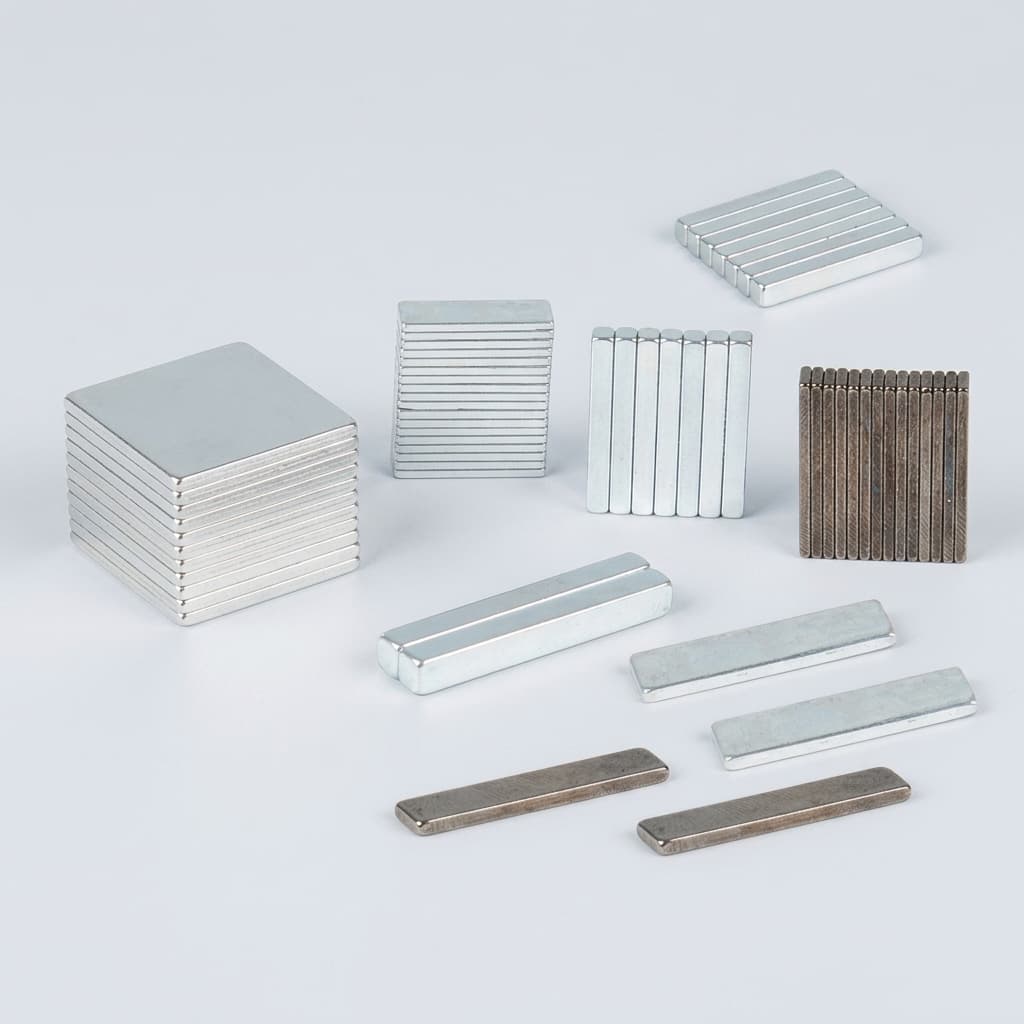
Rare Earth Permanent Magnets Market Update (2026-W22): NdFeB Grade, Tolerance, Magnetization, and Coating Decisions for OEM Buyers
W22 decision brief for US, EU, and APAC OEM buyers on NdFeB grade availability, tolerance risk, magnetization/coating controls, and 2H 2026 RFQ actions.
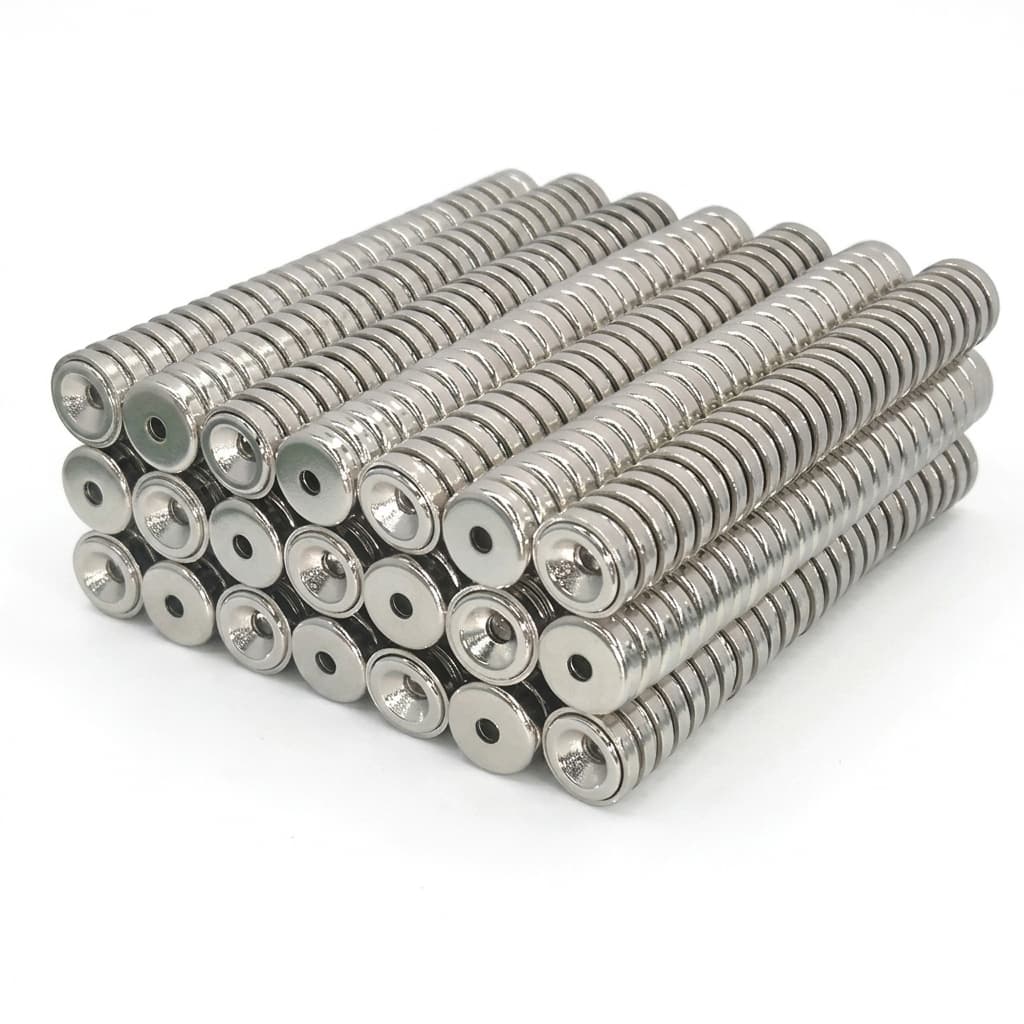
NdFeB Magnet Assembly Guide: Adhesive Bonding vs. Mechanical Fastening
A comprehensive engineering and procurement guide to NdFeB magnet assembly, comparing structural adhesive bonding and mechanical fastening tolerances.