
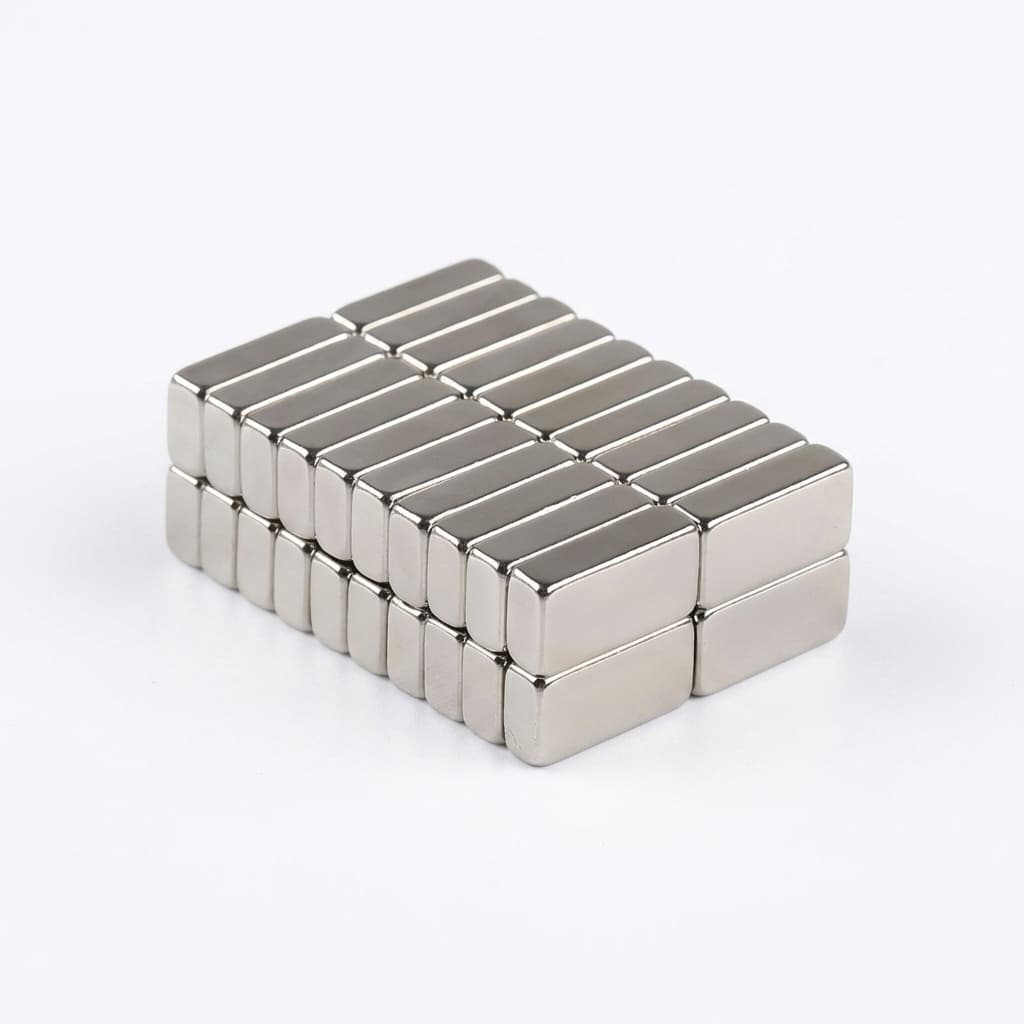
How to Define Magnetization and Coating in Your NdFeB RFQ
A buyer-side specification framework for magnetization and coating that reduces quote ambiguity and lowers sample failure risk.
In practical RFQ review, phrases like "standard magnetization" or "normal coating" are frequent failure points. Each supplier interprets them differently, so quotes look similar while technical risk is not.
This guide focuses on the exact fields that should be locked before quote comparison and sample approval.
Lock these items before supplier comparison
- Magnetization direction that actually matches your assembly.
- Field verification method so supplier and buyer measure the same thing.
- Coating stack matched to environment and handling.
- Pre-PO risk checks that prevent repeated re-quoting.
1) Define magnetization by assembly geometry, not by habit
Use a direction statement that engineering and supplier can both verify.
| Magnetization type | Typical use case | Common buyer mistake | RFQ field that must be explicit |
|---|---|---|---|
| Axial | Disc, block, short cylinders | Only saying "N/S on two faces" without drawing orientation | Polarity orientation drawing and datum face |
| Diametrical | Rings, cylinders in rotating systems | Confusing rotation direction with polarity direction | Reference axis and polarity reference point |
| Radial / multipole | Motor rotor segment assemblies | Requesting "radial" without pole count or arrangement | Pole count, pole pitch, magnetization pattern sketch |
| Custom vector direction | Special sensor or actuator designs | Asking for custom direction without validation method | Direction definition, fixture requirement, acceptance points |
For ring and arc parts, text-only direction is high risk. Always include a sketch with a clear view direction and polarity marks.
2) Define magnetic acceptance with a measurement map
Do not stop at "pass gauss". Use a fixed measurement map so both sides run the same check.
Minimum acceptance fields:
- Test fixture condition (with or without yoke, with or without steel backing).
- Measurement point IDs (for example P1, P2, P3) and exact location rules.
- Instrument type and probe direction.
- Pass window per point (for example min/target/max).
- Sampling plan (how many pieces per lot, and how outliers are handled).
Sample measurement map structure:
| Field | Example value type | Why it matters |
|---|---|---|
| Point ID | P1, P2, P3 | Makes data logs comparable |
| Location rule | Center, edge offset, angular position | Avoids random probe placement |
| Probe direction | Normal to face / tangential | Prevents orientation error |
| Acceptance window | Min/Max range per point | Supports go/no-go decisions |
| Sampling rule | 5 pcs/lot, all points | Prevents one-piece bias |
3) Select coating from environment and handling profile
Coating name alone is not enough. Declare environment and handling context first.
| Coating family (typical) | Relative corrosion protection | Relative mechanical robustness | Typical buyer use context |
|---|---|---|---|
| Ni-Cu-Ni | Medium | Medium | General indoor industrial use |
| Zn | Medium-low | Medium | Cost-sensitive, lower exposure environments |
| Epoxy | High | Medium-high (depends on process) | Humid and higher-corrosion-risk environments |
| Phosphate / conversion | Low (often process-assist) | Low | Special process requirements, not primary barrier |
Note: exact performance depends on process control, substrate prep, and thickness window. Confirm target values with supplier data sheets.
4) Control dimensional impact from coating
Coating changes dimensions. If this is not defined, sample fit issues are common.
In RFQ and drawing package, include:
- Whether key tolerances are pre-coating or post-coating.
- Coating thickness window for functional faces.
- Faces that must not be overbuilt (insertion surfaces, countersinks, tight mating zones).
- Edge/chamfer treatment expectation to reduce chipping during assembly.
5) Failure modes to test in sample phase
Treat samples as a risk screen, not only a schedule step.
| Failure mode | Where it appears | Early check method |
|---|---|---|
| Edge chipping after handling | Packing, manual placement, automated feeding | Basic handling simulation + visual criteria |
| Coating scratch in insertion | Press fit or tight-slot assembly | Controlled insertion test with pass/fail photos |
| Corrosion mark after transit storage | Humid logistics or long storage | Short storage simulation with defined check interval |
| Magnetic inconsistency in pair/set | Multi-magnet assemblies | Pair-set functional check with same fixture |
6) RFQ block you can copy directly
Use this in inquiry email or supplier portal:
Subject: RFQ - NdFeB Magnetization & Coating Definition - [Project Name]

1) Drawing revision and date:
2) Magnetization type (axial/diametrical/radial/custom):
3) Polarity orientation sketch reference:
4) Measurement point map and instrument method:
5) Acceptance window per point:
6) Sampling plan for sample and production lots:
7) Coating family and target thickness window:
8) Environment profile (humidity/corrosion/temperature):
9) Handling profile (manual/automated/insertion load):
10) Critical post-coating dimensions and tolerances:
11) Sample quantity and validation deadline:
12) Pilot and mass-production forecast:
7) Red flags before you release PO
Hold PO if any of the following is unresolved:
- Magnetization described only in text, without a polarity sketch.
- Field acceptance says "standard test" but no point map exists.
- Coating is quoted as "equivalent" without thickness or environment match.
- Post-coating critical dimensions are not declared.
- Sample pass criteria are not documented and signed.
8) Reference standards to align early
To reduce technical ambiguity, buyers usually reference standards explicitly in RFQ notes or acceptance sheets:
- ASTM B117 / ISO 9227 for corrosion test method alignment.
- ISO 2178 for non-destructive coating thickness measurement method (where applicable).
- ISO 2859-1 for lot sampling and acceptance logic.
Always confirm test conditions, exposure duration, and pass criteria in writing. A standard number alone is not enough.
9) Worked acceptance-sheet example (pilot lot)
Below is a practical example for one ring magnet program. Use it as a template, then replace limits with your own application values.
| Check point | Location rule | Target | Lower limit | Upper limit | Sample size | Decision rule |
|---|---|---|---|---|---|---|
| P1 flux density | OD top, 0 deg | 3850 G | 3600 G | 4100 G | 8 pcs | Any point out-of-limit triggers hold |
| P2 flux density | OD top, 90 deg | 3850 G | 3600 G | 4100 G | 8 pcs | Same as P1 |
| P3 flux density | OD top, 180 deg | 3850 G | 3600 G | 4100 G | 8 pcs | Same as P1 |
| Coating thickness | Critical sealing face | 18 um | 14 um | 22 um | 5 pcs | 100% within window |
| ID post-coating | Datum A to B | 20.000 mm | 19.980 mm | 20.020 mm | 5 pcs | No outlier allowed |
Execution notes:
- Define whether gauss values are measured with fixture/yoke, and freeze that condition.
- Keep the same probe orientation between sample and production lots.
- Store raw point-by-point logs, not only averaged values.
10) Coating thickness window by assembly risk
These ranges are planning baselines for buyer discussion, not universal standards.
| Assembly condition | Typical risk | Coating strategy focus | Suggested control emphasis |
|---|---|---|---|
| Loose fit, indoor, low abrasion | Cosmetic and transit handling | Standard Ni-Cu-Ni or Zn path | Visual + spot thickness checks |
| Press fit or repeated insertion | Scratch and local spall risk | Higher robustness path (often epoxy-assisted) | Insertion simulation + edge inspection |
| Humid storage and long transit | Corrosion initiation at edges | Better barrier system with stricter prep control | Salt spray planning + packaging validation |
| Fastener seating near countersink | Local stress concentration | Geometry and coating jointly controlled | Hole-area thickness mapping + crack screen |
11) Magnetization and measurement alignment map (visual)
Final note
When magnetization and coating fields are explicit, quote comparison is cleaner and sample loops are shorter.
For technical review or RFQ feedback, contact [email protected] or WhatsApp +8618857971991. Related buyer resources:
Author

Categories
More Posts
Surface Gauss vs. Pull Force: How Incomplete Specifications Lead to NdFeB Sourcing Failures
Learn why Surface Gauss and Pull Force create custom NdFeB magnet QA disputes, then use a practical RFQ checklist to define tests and air gaps.
Evaluating NdFeB Coating Reliability: A Buyer's Guide to SST, PCT, and Edge Chamfering
Specify custom NdFeB magnet coatings with SST, PCT, and chamfer checks. Use this buyer guide to reduce corrosion risk before RFQ.
NdFeB Shape Selection Guide for OEM RFQ
A buyer-side playbook to choose NdFeB shapes, define RFQ inputs, and compare suppliers with fewer clarification loops and faster sample closure.