
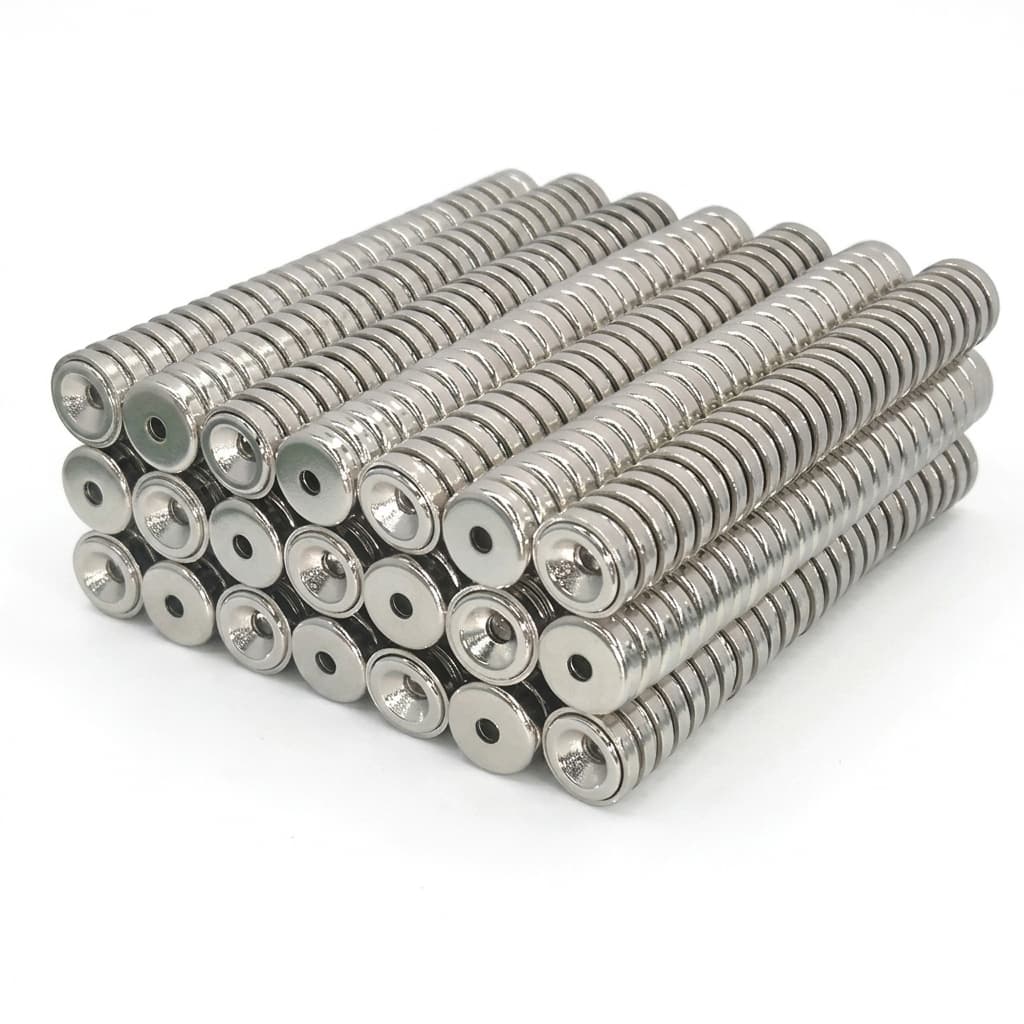
NdFeB Magnet Assembly Guide: Adhesive Bonding vs. Mechanical Fastening
A comprehensive engineering and procurement guide to NdFeB magnet assembly, comparing structural adhesive bonding and mechanical fastening tolerances.
Sintered Neodymium (NdFeB) magnets are incredibly powerful, but their ceramic-like physical properties make them inherently brittle and difficult to assemble. For OEM procurement teams and design engineers, choosing between adhesive bonding and mechanical fastening is a critical decision that dictates the magnet's custom shape, coating specification, and overall assembly yield rate.
A poorly specified assembly method leads to high scrap rates during production—either from cracked magnets due to overtightening or from field failures caused by adhesive delamination.
This guide explores the engineering boundaries of both assembly methods, providing quantitative limits, shape optimization strategies, and a procurement checklist to ensure your next RFQ matches your production reality.
Scope and update note (updated July 26, 2026): This guide is written for global OEM buyers, sourcing teams, and design engineers specifying custom sintered NdFeB magnets for housings, rotors, sensors, fixtures, and magnetic assemblies. It assumes plated or coated NdFeB parts, not flexible magnets or bonded ferrite magnets. Use the numbers below as RFQ guardrails, then validate the exact magnet grade, coating, screw geometry, adhesive, cure schedule, service temperature, and vibration load with samples before production release.
If the base geometry is still open, first normalize the drawing with the NdFeB shape selection guide for OEM RFQs, then use this assembly guide to decide whether the shape should remain simple for bonding or include drilled/countersunk features for fastening.
1. The Core Dilemma: Brittle Material vs. Assembly Stress
Unlike steel or aluminum, sintered NdFeB has practically zero ductility. It cannot deform to absorb stress. When subjected to localized mechanical pressure or bending forces, it will chip, crack, or shatter completely.
Conversely, while adhesive bonding avoids localized mechanical stress, the protective coatings required for NdFeB (like Ni-Cu-Ni or Epoxy) present unique surface energy challenges that can lead to bond failure if not properly managed.
2. Mechanical Fastening: Quantitative Torque Limits
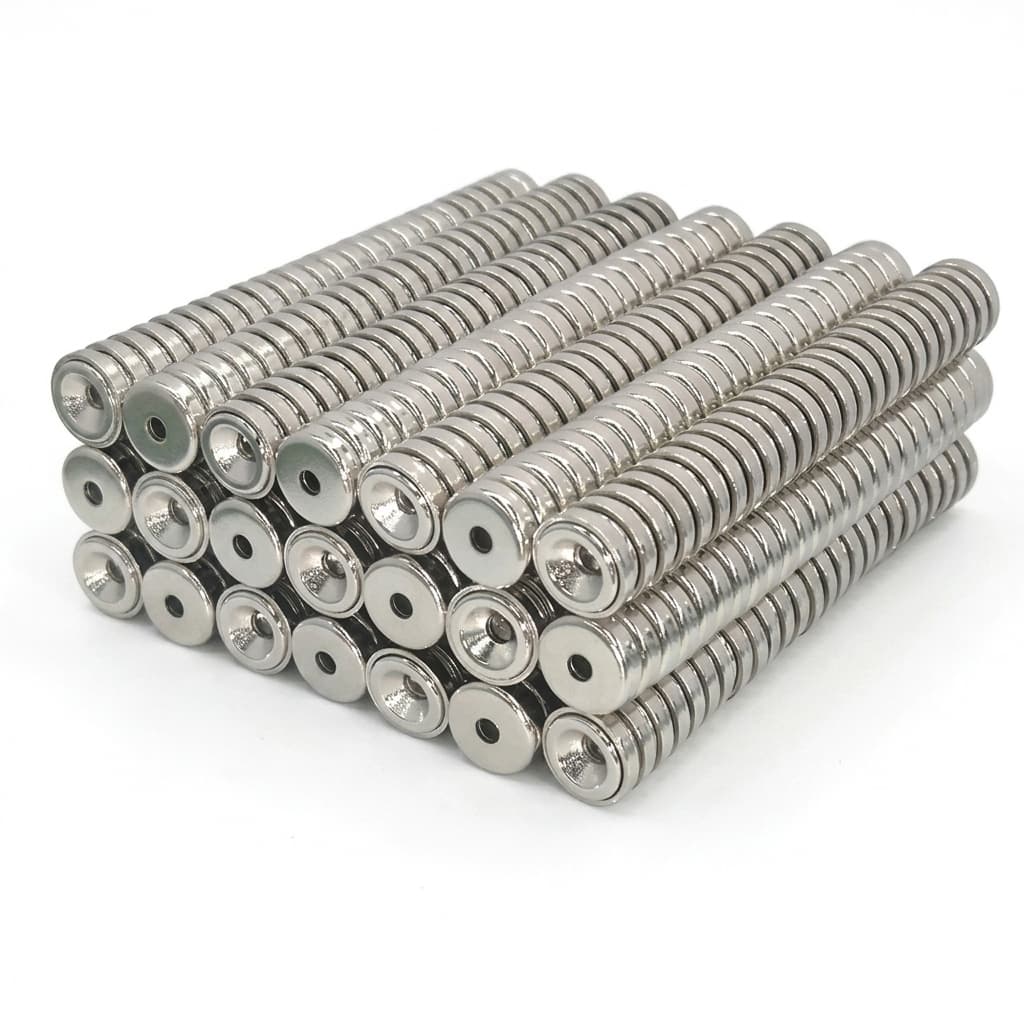
Mechanical fastening typically involves using a non-magnetic screw (e.g., 304/316 stainless steel or brass) through a custom countersunk or counterbored hole in the magnet.
Why You Can't Tap Threads into NdFeB
Never attempt to tap threads directly into a neodymium magnet. The material will crumble under the cutting tool, and even if threads were somehow formed, they would shear off immediately under tension. Always use pre-machined clearance holes.
Torque Limits and Shatter Thresholds
Because of stress concentrations, there is no universal "safe" torque limit, as it depends on the magnet's thickness and the countersink angle. However, extensive industry testing provides critical baselines:
- The Shatter Point: Practical tests show that a standard 1/8" (3.175mm) thick NdFeB magnet will typically shatter when subjected to as little as 30 in/lb (approx. 3.4 Nm) of torque.
- The Safe Assembly Limit: Treat 1.5 to 2.0 Nm as a conservative starting cap for screw-on NdFeB assemblies until your supplier validates the exact magnet thickness, countersink angle, screw head, and mounting surface.
- The "Snug" Rule: The goal is solely to secure the magnet against the mounting surface to prevent sliding. Once the flat-head screw is flush, stop applying force.
Shape & Design Optimizations for Fastening
If you must use mechanical fastening, optimize the magnet's shape during the RFQ phase:
- Match the Countersink Angle: Ensure your 3D CAD model specifies a countersink angle (usually 82° or 90°) that exactly matches your chosen fastener. A mismatch creates a point-load that will instantly crack the magnet.
- Use a Steel Cup (Pot Magnet): For high-impact applications, specify a custom magnetic assembly where the NdFeB magnet is glued inside a steel shell. You bolt the steel shell, not the magnet.
Where the drawing already carries tight dimensional controls, review whether the countersink and coating dimensions are quoted pre-plating or post-plating. The cost impact is similar to other custom features covered in the custom NdFeB magnet tolerance and machining cost guide.
3. Adhesive Bonding: Managing Surface Energy and Gaps
For applications involving high-speed rotors (e.g., BLDC motors) or thin magnets where countersinking is impossible, adhesive bonding is the standard.
Structural Adhesives and Curing Temperatures
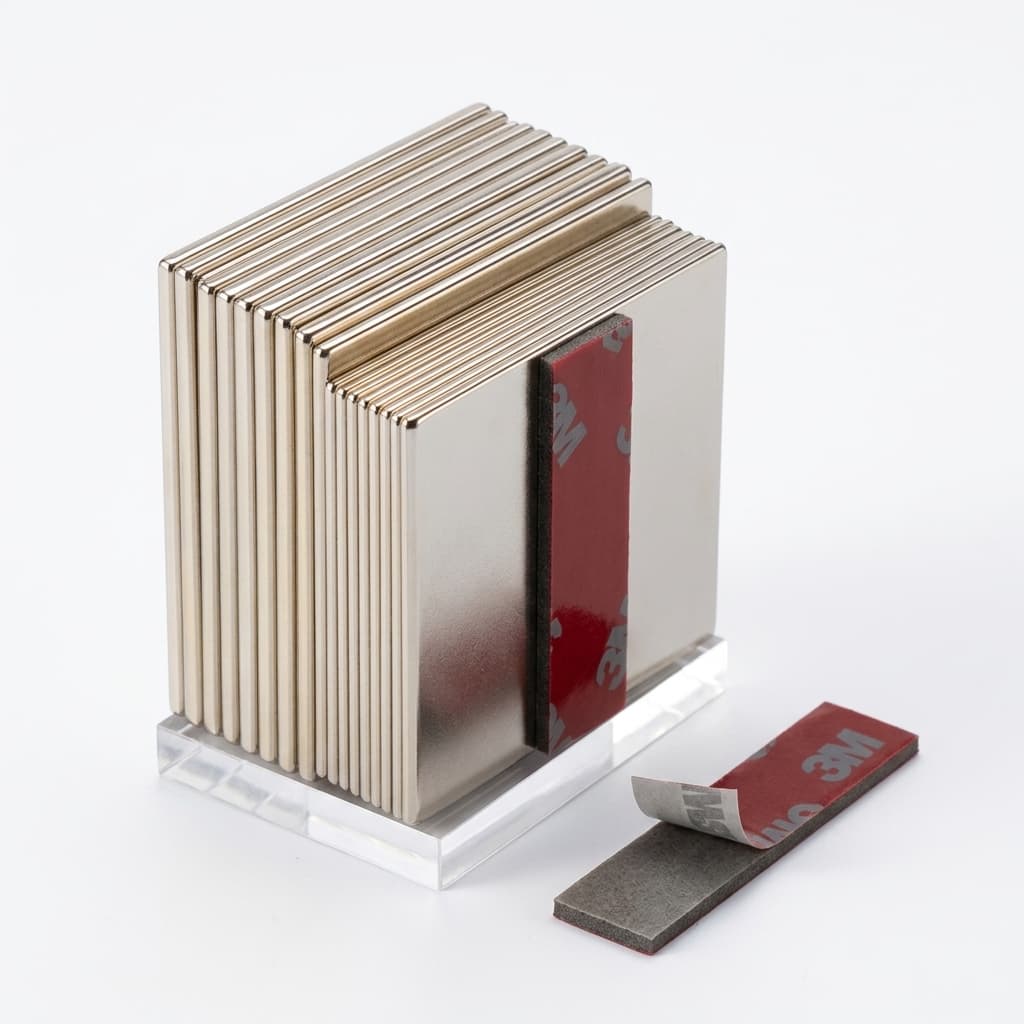
Generic cyanoacrylates (super glue) may work for low-load prototypes, but they should not be the default for high-vibration OEM assemblies. Structural acrylics and two-part epoxies are safer starting points when the bond line must carry shear load, thermal cycling, or rotor vibration.
- Common Choices: Henkel lists LOCTITE AA 326 as a two-step, high-shear acrylic adhesive for magnet bonding, activated with LOCTITE SF 7649. Treat supplier datasheets as the starting point, then test on your exact coating and gap.
- Temperature Risk: Maximum Operating Temperature, Not Curie: Never use hot-melt adhesives or high-temperature heat-cured epoxies that require baking above the magnet's maximum operating temperature (often 80°C for standard N grades). Exceeding this limit can cause irreversible magnetic loss long before the theoretical Curie temperature.
The Abrasion Paradox
Adhesive manufacturers recommend lightly abrading the surface to improve mechanical interlocking. However, NdFeB magnets must be plated (usually Ni-Cu-Ni) to prevent rapid oxidation.
- Warning: If your assembly team sands the magnet too aggressively and exposes the raw NdFeB material, the magnet will corrode underneath the adhesive, leading to catastrophic bond failure over time.
- Alternative: Specify a slightly textured coating (like Phosphating or a specific matte Epoxy) in your RFQ to improve adhesion without post-process sanding.
For humid, salt-spray, or sealed assemblies, pair the adhesive review with a coating reliability review. The failure mode is rarely "glue only"; it is often coating damage, corrosion creep, poor cleaning control, or a cure schedule that the magnet grade cannot tolerate. See the NdFeB coating reliability guide before freezing the process route.
4. Comparison: Bonding vs. Fastening
| Feature | Adhesive Bonding | Mechanical Fastening |
|---|---|---|
| Ideal Magnet Shapes | Blocks, Arc Segments, Thin Discs | Thick Blocks, Rings with Countersinks |
| Risk of Cracking Magnet | Very Low | High (if > 2 Nm torque applied) |
| Assembly Speed | Slower (requires curing time/fixtures) | Fast (immediate securing) |
| High-Temp Capability | Limited by adhesive degradation | Limited only by magnet grade |
| Vibration Resistance | High (with flexible epoxies) | Low to Medium (requires threadlocker) |
| Tooling / Machining Cost | Lower (simple shapes) | Higher (requires custom hole drilling) |
| RFQ Evidence Needed | Adhesive name, gap, surface prep, cure schedule, coating | Screw type, countersink angle, torque cap, flatness, coating allowance |
RFQ decision rule: Choose adhesive bonding when the magnet is thin, curved, arc-shaped, or loaded mainly in shear. Choose mechanical fastening only when serviceability, immediate clamping, or a steel carrier makes the screw load predictable. If the assembly sees both vibration and high temperature, request samples of both routes and run the same thermal, pull, and vibration checks before approving mass production.
5. Engineering & Procurement Checklist for Assembly
Before sending your RFQ for custom NdFeB shapes, ensure your team has verified the following:
- For Fastening: Is the countersink angle explicitly defined on the 2D drawing to match your exact screw?
- For Fastening: Has the assembly line been provided with torque-limiting screwdrivers set to < 2.0 Nm?
- For Fastening: Is the mounting surface perfectly flat? (Screwing a brittle magnet to a curved surface will snap it).
- For Bonding: Is the adhesive gap specified in the CAD model? (Usually 0.1mm - 0.2mm depending on adhesive viscosity).
- For Bonding: Does the adhesive's cure temperature remain safely below the magnet's maximum operating temp?
- For Bonding: Have you defined cleaning chemistry and banned unvalidated acidic or halogenated cleaners that could attack a damaged coating?
- For Both: Has quality defined the validation test: pull/shear force, thermal exposure, vibration, corrosion screening, and post-test visual inspection?
6. Frequently Asked Questions (FAQ)
Q: Can I use standard Loctite threadlocker (like 242) directly on the magnet? A: Threadlockers are designed for metal-to-metal threads. Since you cannot tap threads into NdFeB, threadlocker is only used on the stainless steel screw interfacing with the tapped hole in your mounting fixture, not the magnet itself.
Q: Why did our glued magnets fall off after 6 months in the field? A: The most common causes are using an adhesive incompatible with the smooth Ni-Cu-Ni plating, failing to degrease the magnet before gluing, or the magnet slowly corroding from the inside out because the plating was damaged during handling.
Q: What is the minimum thickness for a countersunk magnet? A: Generally, we do not recommend countersinking any NdFeB magnet thinner than 3mm (1/8"). There simply isn't enough material left at the bottom of the countersink to withstand the screw head's pressure.
Q: Which option is safer for a new custom NdFeB magnet program? A: If the part can remain a simple block, disc, or arc segment, adhesive bonding is usually the lower-risk starting point because it avoids stress concentration in a brittle magnet. If the assembly must be removable, use a steel cup, carrier, or insert so the screw clamps the metal hardware rather than concentrating load in the magnet body.
7. Next Steps for Your Custom Assembly
Choosing the right assembly method requires aligning your mechanical design with the realities of NdFeB manufacturing. Whether you need precision-drilled countersunk rings for mechanical fastening or tightly toleranced arc segments optimized for rotor bonding, we can manufacture to your exact assembly requirements.
Start from the custom NdFeB magnet product overview if you are still comparing shapes, grades, and coating routes. If the assembly drawing is ready, contact our engineering team with your CAD files, annual volume, operating temperature, screw or adhesive preference, and test requirements so we can verify shape tolerances and coating selections before sample production.
Sources & References
- K&J Magnetics: All About Countersunk Magnets - kjmagnetics.com/blog/all-about-countersunk-magnets
- Henkel: LOCTITE AA 326 product data - next.henkel-adhesives.com
- K&J Magnetics: Neodymium Magnet FAQ on temperature, machining, adhesives, and coatings - kjmagnetics.com/FAQ.asp
- Arnold Magnetic Technologies: Neodymium Iron Boron magnets, maximum use temperature and corrosion - arnoldmagnetics.com/products/neodymium-iron-boron-magnets
Author

Categories
More Posts
Rare Earth Permanent Magnets Market Update (May 2026): Buyer Playbook for NdFeB Grades, Tolerances, Magnetization, and Coatings
May 2026 NdFeB magnet market update for US/EU/APAC buyers: grade, tolerance, magnetization, coating, pricing, lead-time shifts, and RFQ actions to apply now.
Sample-to-Mass Production Quality Gates for NdFeB OEM Programs
A buyer-side gate framework with deliverables, owner roles, and release criteria to keep NdFeB OEM supply stable from sample to mass production.
Rare Earth Permanent Magnets Market Update (2026-W22): NdFeB Grade, Tolerance, Magnetization, and Coating Decisions for OEM Buyers
W22 decision brief for US, EU, and APAC OEM buyers on NdFeB grade availability, tolerance risk, magnetization/coating controls, and 2H 2026 RFQ actions.