
Alias merge
single URL
1 16in long bar neodymium magnets is answered here as a 1/16 in thickness long-bar query, not as a dedicated route.
Convert a long bar magnet phrase into RFQ-ready dimensions, estimate weight and axial pull, then use the report layer to decide grade, magnetization, coating, segmentation, and sample validation.
The phrase 1 16in long bar neodymium magnets is handled on this single canonical URL. It is treated as a likely 1/16 inch thickness long-bar requirement until a drawing confirms the exact face dimension.
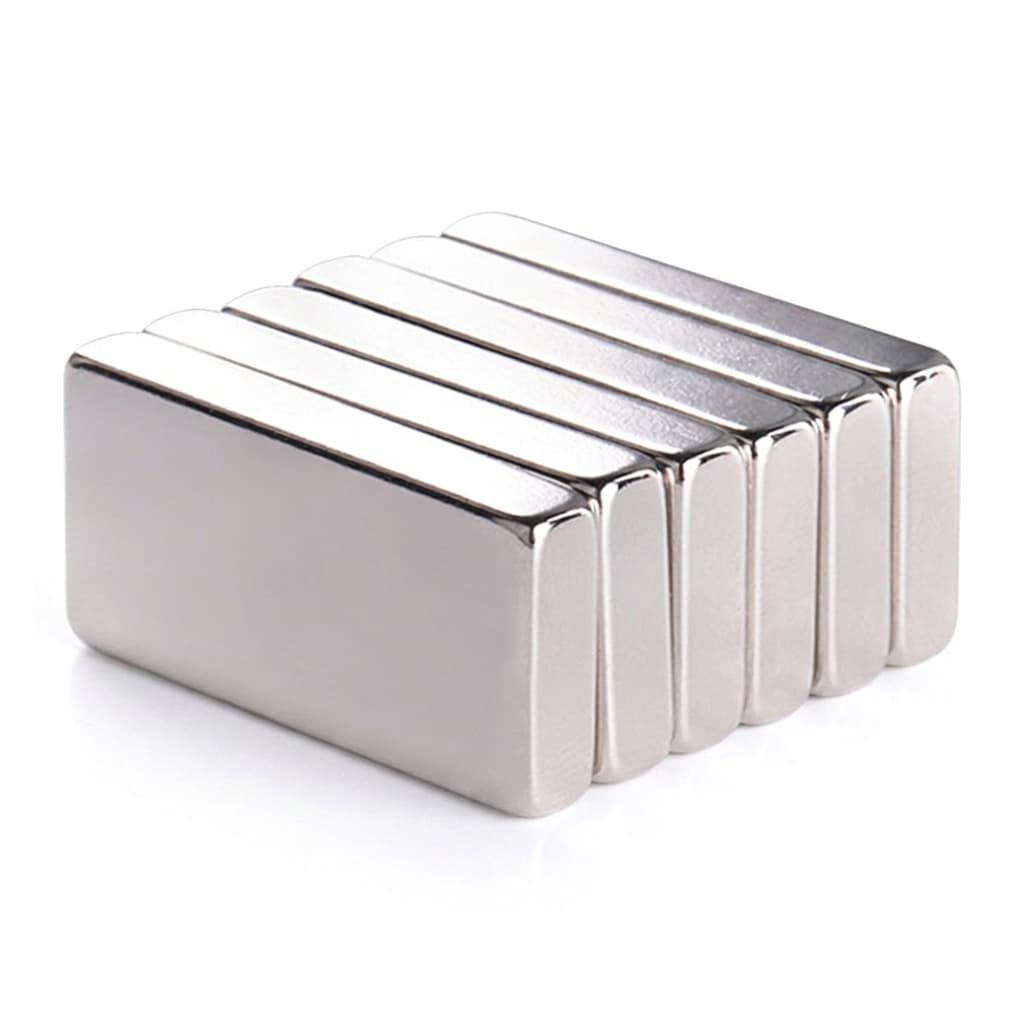
Long Bar Quick Check
Defaults interpret the alias 1 16in long bar neodymium magnets as a long bar with a 1/16 in thickness to review, not as a separate URL.
Supported range: 1-250 mm.
Supported range: 0.8-80 mm.
Default is 0.0625 in, or 1/16 in.
Supported range: 1-1,000,000 pieces.
The 1/16 in thickness alias is very chip-sensitive; specify chamfer, coating build, handling, and packaging before samples.
Next step: Send these inputs with the warnings below and ask engineering to confirm segmentation, magnetization, pull-test setup, and packaging.
Estimated axial pull
26.55 lbf
118.1 N on clean thick steel
Single magnet weight
1.946 g
Batch weight
0.97 kg
Slenderness ratio
16.0:1
Conservative shear hold
4.25 lbf
Review before quoting
Canonical route
/learn/long-neodymium-bar-magnets
1/16 in metric
1.5875 mm
Best next step
Sample test
Alias merge
single URL
1 16in long bar neodymium magnets is answered here as a 1/16 in thickness long-bar query, not as a dedicated route.
Default size
25.4 x 6.35 x 1.59 mm
The quick check starts with 1 x 1/4 x 1/16 in because the alias contains 1 16in but does not fully define width or grade.
Screening mass
about 1.95 g
A 1 x 1/4 x 1/16 in sintered NdFeB bar weighs about 1.95 g using 7.6 g/cm3 density.
Decision boundary
test fixture
Long neodymium bar magnets need pull or field validation in the real channel, gap, steel thickness, and magnetization direction.
Risk marker
brittle, not structural
MMPA guidance treats permanent magnet materials as inherently brittle and not structural components, so thin long bars need chip, handling, and retention controls.
Safety threshold
< 50 kG2 mm2
If a loose or separable magnet is in a subject consumer product and fits the small-parts cylinder, 16 CFR Part 1262 requires flux index below this value.
Long neodymium bar magnets are useful when the assembly needs a narrow magnetic rail, latch strip, sensor trigger, or constrained rectangular insert. The practical decision is not only grade: it is the combination of length, thickness, magnetization direction, target steel, gap, coating, and handling risk.
The alias is intentionally merged here because the buyer question is the same as the canonical topic: how to normalize a long bar magnet phrase, convert the 1/16 inch dimension, and decide whether the RFQ is buildable.
The tool estimates mass from geometry and density, then estimates axial pull with a simplified pole-area and magnetic-circuit factor. It is intentionally conservative about uncertainty: public material data supports screening, while finished pull requires a controlled sample test.
| Evidence point | Value used | Source / boundary |
|---|---|---|
| Alias dimension conversion | 1/16 in = 1.5875 mm; 1 in = 25.4 mm exactly | NIST Handbook 44 Appendix B, 2026 edition, accessed June 16, 2026. |
| N42 screening properties | BHmax about 40-42 MGOe; density 7.6 g/cm3 | Arnold Magnetic Technologies N42 data sheet, Rev. 151021, accessed June 16, 2026. |
| Grade comparison range | Catalog table lists N35 through N52 basic grades with 80 C or 60 C markers by grade | Arnold Neodymium-Iron-Boron Magnet Grades catalog, Rev. 181031, accessed June 16, 2026. |
| Shape and size caveat | Material data and demagnetization curves are typical and may vary with product shape and size | Arnold N42 and N52 public data sheets, accessed June 16, 2026. |
| Thermal review | Standard NdFeB examples include 80 C maximum working-temperature markers, but the actual limit is geometry and circuit dependent | Eclipse Magnetics / Bunting standard NdFeB material data sheet, accessed June 16, 2026. |
| Material specification framing | Permanent magnet material specifications cover minimum principal magnetic properties and dimensional tolerances; density and composition ranges are information-only context | IEC 60404-8-1:2023 webstore summary, accessed June 16, 2026. |
| Measurement framework | IEC 60404-5 defines magnetic-property measurement methods for permanent magnet materials | IEC 60404-5 standards summary, accessed June 16, 2026. |
| Consumer safety boundary | Subject magnet products manufactured after October 21, 2022 must keep each qualifying small loose/separable magnet below 50 kG2 mm2 flux index | CPSC Magnets Business Guidance and eCFR 16 CFR Part 1262, accessed June 16, 2026. |
| Brittleness and chip acceptance | Permanent magnets generally lack ductility, should not be structural components, and must be free of loose chips or particles under normal handling and service | MMPA Standard No. 0100-00, Permanent Magnet Materials, accessed June 16, 2026. |
| Critical-mineral supply concentration | IEA 2025 outlook projects China at around 80% of refined rare earth elements in 2035; USGS 2026 lists 67% U.S. net import reliance for rare-earth compounds and metals in 2025 | IEA Global Critical Minerals Outlook 2025 and USGS Mineral Commodity Summaries 2026, accessed June 16, 2026. |
| EU magnet circularity signal | The EU Critical Raw Materials Act sets recyclability and recycled-content requirements for products containing permanent magnets | European Commission Critical Raw Materials Act page, accessed June 16, 2026. |
A 1/16 inch thickness is practical for some rails and sensor strips, but it moves the design into a fragile handling range. Treat edge finish, coating build, and packaging as functional requirements, not cosmetic details.
| Item | Known | Still unknown |
|---|---|---|
| 1/16 in thickness conversion | 1.5875 mm exactly | Whether the searched phrase means thickness, width, or length without a drawing |
| Default 1 in long bar mass | About 1.95 g for 1 x 1/4 x 1/16 in using 7.6 g/cm3 | Actual lot mass after coating, chamfer, and tolerance stack |
| Grade family | N35, N42, and N52 public property ranges are available from suppliers | Best grade for the buyer until heat, gap, target steel, and cost are known |
| Pull force | Can be estimated for screening using pole area and fixture assumptions | Certified force without a controlled sample test |
| Flux index / consumer scope | 16 CFR Part 1262 threshold is less than 50 kG2 mm2 for qualifying subject magnet products | Whether an industrial long-bar RFQ enters scope without end-use, retention, small-parts fit, and flux-index test evidence |
| Supply resilience | IEA and USGS public data show concentrated rare-earth refining and U.S. import reliance for compounds/metals | Actual factory lead time, alloy allocation, export-license exposure, and non-China premium for a specific PO |
These fields turn the canonical topic and alias phrase into a quoteable long bar magnet requirement.
| Field | Recommended RFQ wording | Why it matters |
|---|---|---|
| Dimensions | State length x width x thickness, tolerance, inspection datum, and whether 1/16 in means finished thickness after coating | IEC 60404-8-1 covers dimensional tolerances at the material-specification level, but the RFQ still needs a finished-part inspection rule. |
| Grade | Use N35, N42, N52, or high-coercivity family with public data sheet and lot traceability | Higher grade can raise room-temperature energy, but heat margin and cost may be worse than a lower grade or larger bar. |
| Mechanical role | Do not use the magnet as a beam, stop, screw boss, hinge, or primary load-bearing member | MMPA guidance says most permanent magnet materials lack ductility and should not be used as structural components. |
| Magnetization | State through-thickness, through-width, or through-length magnetization | Long-axis magnetization can require special fixtures and changes pole area, pull, inspection, and lead time. |
| Edge finish | Specify chamfer or radius, visual acceptance, and chip limits | Thin long bars chip easily; coating loss on edges can drive corrosion complaints. |
| Coating | Ni-Cu-Ni for indoor use; epoxy or other coatings when corrosion, adhesive bonding, or abrasion is expected | Coating changes dimensions, bond behavior, corrosion life, and actual air gap. |
| Pull or field test | Define target steel thickness, air gap, channel geometry, pull direction, speed, temperature, and pass value | Catalog pull values cannot be compared unless the fixture and surface are defined. |
| Packaging | State spacers, trays, keepers, field shielding, export labels, and drop-test expectations | Long bars can snap together, chip corners, magnetize packaging hardware, or exceed carrier field limits. |
| Compliance scope | State industrial-only, professional, educational, toy, jewelry, stress-relief, or consumer-accessible end use | CPSC magnet rules can change the required evidence when magnets are loose, separable, small enough to ingest, and consumer-facing. |
The strongest page conclusion is also the most conservative one: standards and data sheets can make the RFQ measurable, but they do not replace a finished-part test. Use this boundary before accepting a catalog pull number or a grade-only quote.
| Source | Can support | Cannot support alone |
|---|---|---|
| NIST Handbook 44 Appendix B, 2026 | Unit conversion is exact: 1 inch = 25.4 mm, so 1/16 inch = 1.5875 mm. | Which face the buyer meant by "1 16in" or whether coating tolerance fits the pocket. |
| IEC 60404-8-1:2023 | Material specifications can define minimum principal magnetic properties and dimensional tolerances. | Finished assembly pull, corrosion life, chip survival, or compliance in the buyer product. |
| IEC 60404-5:2015 | There is a recognized framework for measuring magnetic properties of permanent magnet materials. | A catalog pull value in an undefined steel target, air gap, or shear direction. |
| MMPA Standard No. 0100-00 | Mechanical acceptance needs explicit chip, burr, and brittleness handling criteria. | That the magnet can be used as a structural beam, stop, or load-bearing member. |
| 16 CFR Part 1262 / CPSC guidance | Subject consumer magnet products have a small-parts and flux-index safety threshold. | Industrial-only exemption without documented channel, end use, retention, and resale controls. |
Long bar naming does not define polarity. Lock the magnetization direction before samples because the same L x W x T bar can act like three different parts.
| Option | Best use case | Caution |
|---|---|---|
| Through thickness | Flat latch, channel insert, strip against steel plate | Usually easiest to source, but thin bars may have low magnetic circuit margin. |
| Through width | Side-attracting rail, sensor stripe, paired bar arrays | Changes pole area and field shape; ask supplier to confirm fixture and field map. |
| Through length | End-pole assemblies, special sensor or separator designs | Often special-order for long bars and should not be assumed from catalog wording. |
Public data supports grade screening, but it does not give one universal safe temperature for every long bar. Thin geometry, open magnetic circuits, and high grade can reduce irreversible-loss margin. If heat is part of the duty cycle, keep the conclusion pending until supplier review.
A reliable long bar RFQ separates material evidence from finished-part evidence. This prevents a grade certificate from being misread as a guaranteed latch force or consumer-safety approval.
| Layer | Proves | Does not prove |
|---|---|---|
| Material certificate | Grade-property range such as Br, Hcb, Hcj, and BHmax | Finished holding force, edge-chip durability, hot pull, or shipping safety |
| Dimensional inspection | Length, width, thickness, coating build, chamfer, and tolerance | Magnetization direction, usable field, corrosion life, or adhesive bond |
| Pull or field test | Performance under the stated steel, gap, channel, direction, and temperature | Performance after changing coating, bracket, shear load, or heat exposure |
| Packaging and safety review | Separation method, field shielding, retention design, warning labels, and route constraints | Consumer-product compliance unless scope, small-parts fit, and flux-index evidence are documented |
Send the drawing, target steel, gap, magnetization direction, coating, and sample quantity so engineering can check whether the estimate is buildable before pilot order.
Scenario 1
Assumption: 1 in long bar, through-thickness magnetization, painted steel target, room-temperature use.
Action: Run the painted-gap condition, add a steel return path if force is low, then prototype the actual door gap.
Expected result: A channel assembly can outperform a stronger bare bar if the air gap is controlled.
Scenario 2
Assumption: N42 or N52 bar, fixed plastic pocket, field threshold at a Hall sensor instead of holding force.
Action: Use the tool for size and mass only, then request a field map at the sensor distance.
Expected result: Magnetization direction matters more than generic pull force for the sensor decision.
Scenario 3
Assumption: Long bars arranged in a row, abrasive powder exposure, cleanability required.
Action: Review coating, stainless carrier, spacing, and whether individual bars should be segmented.
Expected result: Bare thin bars are usually a poor final format unless protected by a housing.
Scenario 4
Assumption: Small separable long bar can detach and may be reachable by children.
Action: Check CPSC scope, retention, small-parts fit, flux index, warnings, and channel restrictions before samples.
Expected result: Do not treat an industrial RFQ estimate as product-safety approval.
Scenario 5
Assumption: N52 or high-coercivity bar, annual demand, customer needs stable delivery across regions.
Action: Ask for origin, coating line, magnetization capacity, inventory buffer, and second-source plan instead of comparing only unit price.
Expected result: The lowest sample quote may be the weakest production choice when rare-earth supply or licensing risk changes.
A long bar can be the right answer when it fits the assembly channel, but a different design move often beats a stronger bare magnet.
If yes: Treat chipping, bowing, packaging, and magnetization uniformity as RFQ risks; consider segmented bars.
If no: A standard block/bar process may be enough, but pull still needs target-surface validation.
If yes: Add a mechanical stop, channel, adhesive validation, or cup/rail structure. Axial pull is not a shear guarantee.
If no: Use axial pull screening and validate against the actual mating steel and air gap.
If yes: Ask for high-coercivity grade review, operating-point analysis, and hot pull or aging evidence.
If no: Room-temperature screening can proceed, but impact, gap, coating, and steel saturation still matter.
If yes: Freeze coating build, tolerance, chamfer, and inspection method before sample purchase.
If no: A thicker or wider bar may reduce cost, improve strength, and lower breakage risk more than a higher grade.
If yes: Do not rely on industrial RFQ language. Review 16 CFR Part 1262, small-parts fit, flux index, retention, labeling, and product category.
If no: Document the industrial-only channel and retention method so later packaging or resale changes do not reopen the safety scope.
If yes: Add source-country, alloy availability, coating capacity, magnetization fixture, and buffer-stock questions to the RFQ.
If no: Prototype decisions can focus on geometry and field fit, but avoid locking a custom magnetization path before supply review.
| Option | Best for | Tradeoff |
|---|---|---|
| Long neodymium bar magnets | Slim rails, latches, sensors, fixtures, and constrained channels | High flux in compact space but brittle edges, special magnetization, and packaging risk increase with slenderness. |
| Short block magnets | Compact pockets and simpler grinding or inspection | Easier handling, but may need multiple pieces or different spacing to cover a long rail. |
| Segmented bar array | Long tracks where breakage, bowing, or magnetization limits are risky | More assembly steps and polarity-control requirements, but often safer than one fragile long strip. |
| Cup or channel assembly | Holding tasks where usable pull matters more than bare magnet grade | Adds steel hardware and corrosion design, but can improve field return and mechanical retention. |
| Ferrite or bonded magnet strip | Lower-cost, lower-force rails or flexible attachment tasks | Much lower energy density, so it is not a drop-in replacement for a strong NdFeB bar. |
For one-off samples, dimensional and magnetic evidence may be enough. For production, rare-earth concentration, export-control timing, magnetization capacity, and customer-market rules become buying criteria. This is especially relevant after the IEA 2025 and USGS 2026 signals on rare-earth concentration and import reliance.
| Buying stage | Evidence to request | Watchout |
|---|---|---|
| Sample-only prototype | Drawing review, material data sheet, magnetization direction, coating option, and 5-20 sample plan | Do not let sample availability lock a custom long-axis magnetization before production capacity is checked. |
| Pilot build | Lot traceability, inspection report, packaging test, pull or field report, and lead-time validity window | Pilot parts can pass while packaging or coating yield still fails at higher quantity. |
| Annual production | Alloy sourcing plan, second-source path, buffer stock, coating-line capacity, and export or customer compliance scope | Rare-earth supply concentration makes a lowest-price quote weaker if it has no allocation or substitution plan. |
| EU-market product | Magnet presence, removability, weight, composition evidence, recycling notes, and customer data-carrier needs | CRMA-driven customer requests can appear at product level even when the magnet itself is a small component. |
Impact: 1 16in long bar neodymium magnets can mean a 1/16 in thickness, but it does not define width, grade, coating, or magnetization.
Mitigation: Normalize the phrase to this canonical page and require a drawing or L x W x T confirmation before quote.
Impact: N52 can lose to N42 in real use if the air gap, steel thickness, or heat condition is worse.
Mitigation: Specify pull or field test method and compare sample results, not only grade labels.
Impact: A supplier may quote through-thickness magnetization while the assembly expects end poles.
Mitigation: State magnetization direction on the drawing and ask for field map or polarity inspection plan.
Impact: Thin bars can chip during separation, assembly, and shipment, exposing NdFeB to corrosion and creating loose-particle risk.
Mitigation: Define chamfer, coating thickness, visual criteria, loose-chip rejection, packaging separators, and sample handling tests.
Impact: A thin high-grade bar can sit near a weak operating point and lose irreversible margin under heat.
Mitigation: Review high-coercivity grades, magnetic circuit, and hot pull tests before hot-duty approval.
Impact: A bar that looks strong in axial pull may slide under vibration or side load.
Mitigation: Use mechanical retention, adhesive testing, and shear-specific validation.
Impact: Small separable magnets in consumer products may trigger magnet safety rules, including a flux-index threshold for qualifying products.
Mitigation: Document intended channel, retention, small-parts fit, flux-index evidence, and warnings before launch.
Impact: A price-only decision can fail when dysprosium, terbium, NdPr, coating capacity, or export-license timing changes after samples.
Mitigation: Ask for second-source options, alloy substitutions, grade-family alternatives, safety stock, and lead-time validity on every production quote.
Updated June 16, 2026. The conclusions above use public supplier data, standards pointers, safety resources, and exact unit conversion. Where the final value depends on a buyer-specific fixture, the page marks the result as screening guidance rather than certified data.
Used for exact inch-to-millimeter conversion, including 1 inch = 25.4 mm. Accessed June 16, 2026.
Used for N42 property range and 7.6 g/cm3 density screening. Accessed June 16, 2026.
Used for grade-family comparison and temperature markers. Accessed June 16, 2026.
Used for standard NdFeB thermal marker context and working-point caveat. Accessed June 16, 2026.
Used to frame magnetic-property measurement, material-property minimums, dimensional tolerances, and the information-only nature of density and composition values. Accessed June 16, 2026.
Used for consumer magnet safety scope, October 21, 2022 applicability marker, and the less-than-50 kG2 mm2 flux-index requirement for qualifying loose or separable small magnets. Accessed June 16, 2026.
Used for mechanical-risk framing: permanent magnet materials generally lack ductility, should not be structural components, and require agreed chip and burr acceptance. Accessed June 16, 2026.
Used for rare-earth supply concentration and long-horizon refined-supply risk context. Accessed June 16, 2026.
Used for U.S. rare-earth import reliance, 2025 production context, recycling note, and 2025 export-control timeline. Accessed June 16, 2026.
Used for EU permanent-magnet recyclability and recycled-content signal when products enter EU markets. Accessed June 16, 2026.
No. This implementation treats it as an alias of long neodymium bar magnets and keeps one canonical URL at /learn/long-neodymium-bar-magnets.
The page interprets the phrase as likely 1/16 inch thickness, or 1.5875 mm, because long bar RFQs normally need length x width x thickness. A drawing should confirm whether the buyer meant thickness, width, or another face.
The default is 1 x 1/4 x 1/16 in, which converts to 25.4 x 6.35 x 1.5875 mm. Width and grade are editable because the alias does not specify them.
No. It is an RFQ screening tool. Guaranteed pull force needs a controlled test fixture, target steel thickness, air gap, coating, magnetization direction, temperature, and pass value.
There is no universal best grade. N52 can help when the envelope is fixed and room-temperature energy is the bottleneck, while N42 or N35 can be better for cost, availability, or heat margin.
Only when the assembly needs end poles and the supplier confirms tooling. Many rectangular bars are easier to source through thickness or width.
Sintered NdFeB is hard and brittle. Thin long bars can chip, crack, bow, or lose edge coating during separation, assembly, and shipment.
Consider segmentation when the slenderness ratio is high, the bar is hard to magnetize uniformly, packaging risk is high, or a long rail can tolerate multiple shorter magnets.
Ni-Cu-Ni is common for indoor use. Epoxy, zinc, or custom coatings should be reviewed when corrosion, abrasion, bonding, or salt-spray exposure is expected.
They can, but standard grade labels are not enough. State continuous and peak temperature, then ask for high-coercivity grade review and hot pull or aging evidence.
Sometimes. A single bar reduces assembly count, but segmented blocks can reduce breakage risk, improve packaging, and make polarity control easier in some rails.
Send L x W x T, tolerance, grade, magnetization direction, coating, chamfer, quantity, target steel or sensor distance, pull or field test method, operating temperature, and packaging needs.
Yes. If a magnet is loose or separable in a subject consumer product, CPSC guidance and 16 CFR Part 1262 can require flux-index evidence. Industrial-only use should still document channel and end-use restrictions.
Do not design it as the structural load path. MMPA guidance treats most permanent magnet materials as inherently brittle and unsuitable as structural components, so use a carrier, pocket, adhesive system, fastener, or mechanical stop for load retention.
No. IEC 60404-8-1 helps frame material-property minimums and dimensional tolerances. It does not certify the finished pull force in your steel target, air gap, coating, temperature, or shear condition.
Yes when the project moves beyond samples. IEA 2025 and USGS 2026 data show rare-earth supply concentration and import reliance, so production quotes should include lead-time validity, second-source options, alloy alternatives, and buffer-stock assumptions.
Potentially. If the finished product is placed on the EU market and contains permanent magnets, Critical Raw Materials Act requirements around recyclability and recycled content can become part of the customer evidence package.
Send the normalized dimensions and application conditions for engineering review, then validate samples in the actual channel, target steel, air gap, and temperature condition before production.
Inquiry Email